Multi-Agent Perception System for Overseas Chinese Gardens
I. Problems Addressed and Product Positioning
Overseas Chinese gardens often face two types of practical challenges in cross-cultural communication: First, it is difficult to quantify the differences in how audiences from different cultural backgrounds perceive the cultural elements of gardens. For instance, Western tourists may simplify the artistic conception of rockeries—known as “miniature landscapes of mountains and forests within a narrow space”—as “piles of stones”, while Eastern tourists can better appreciate the design ingenuity of “borrowed scenery” and “framed scenery”. Such cognitive gaps are hard to capture systematically through static questionnaires. Second, it is challenging to pre-optimize communication strategies, which mostly rely on ex-post feedback collection, resulting in high time consumption and trial-and-error costs.
Targeting these key challenges, the prototype of the Multi-Agent Perception System for Overseas Chinese Gardens we developed is positioned as an “auxiliary tool for cross-cultural communication” rather than a replacement for human decision-making. By simulating the cultural characteristics of users from 23 countries (e.g., American users focus more on personal experiences, while Japanese users emphasize reserved expression), it generates feedback that aligns with local linguistic styles and cognitive habits. Additionally, it can analyze users’ emotional tendencies and focus areas (e.g., European users care about details, while North American users prioritize interactive experiences), catering to the practical needs of cultural communication institutions, tourism promotion teams, and garden design enterprises.
II. Practical Value and Effectiveness
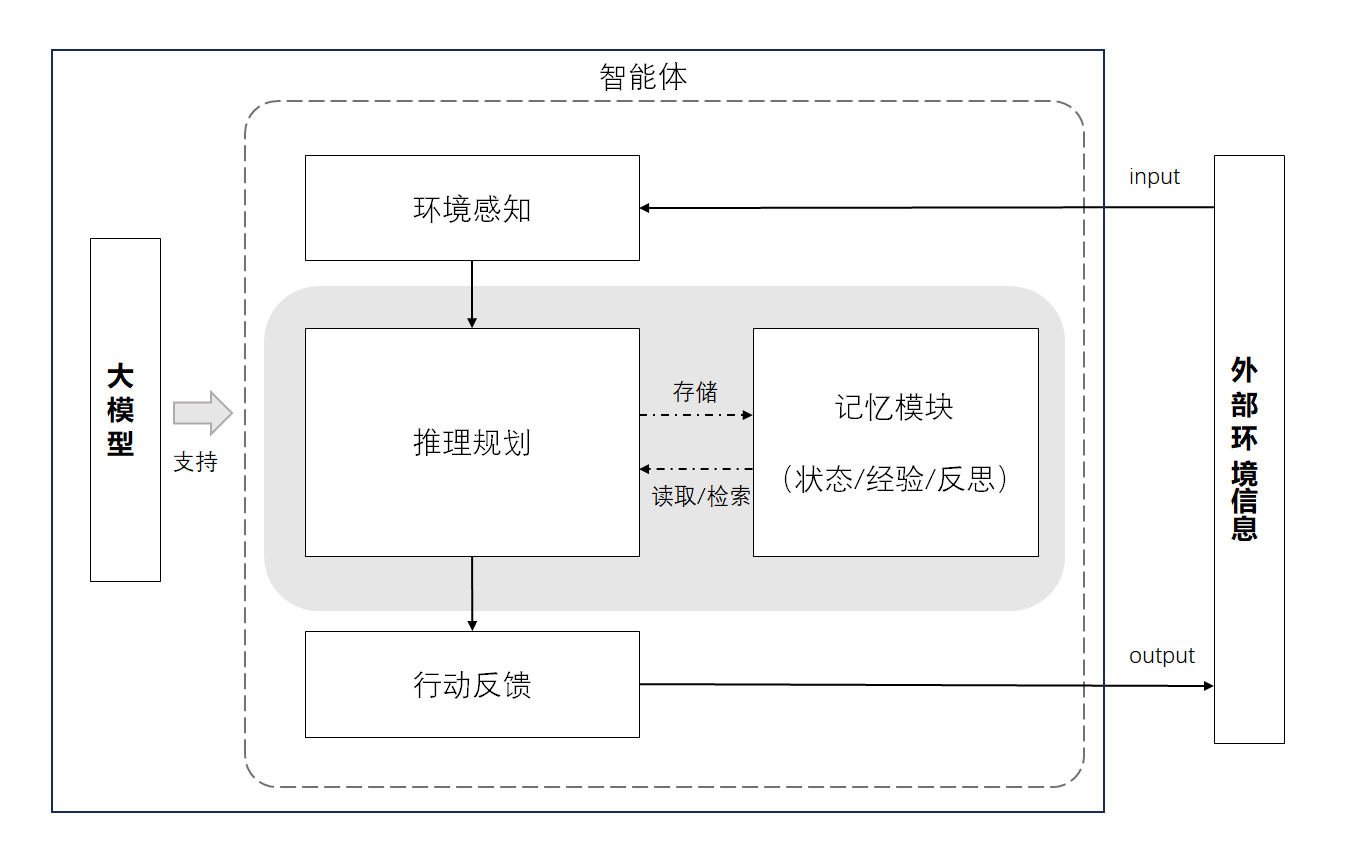 Figure 1 Agent Conceptual Framework Based on Large Models
Based on test applications, the system has been able to address core needs: it can accurately simulate feedback from users of different cultural backgrounds, with style consistency outperforming ordinary models; it can quickly output analysis results. For example, the emotional tendency of a certain garden promotion content leans positive among European users, while North American users pay more attention to “whether it is suitable for photography”, assisting communicators in adjusting priorities in advance. Compared with traditional questionnaire methods, its efficiency has been improved by over 80%, eliminating the need to make revisions after actual communication and significantly reducing trial-and-error costs. Currently, the system can process text and image content and output basic analysis reports, meeting the basic demands for preliminary prediction in cross-cultural communication.
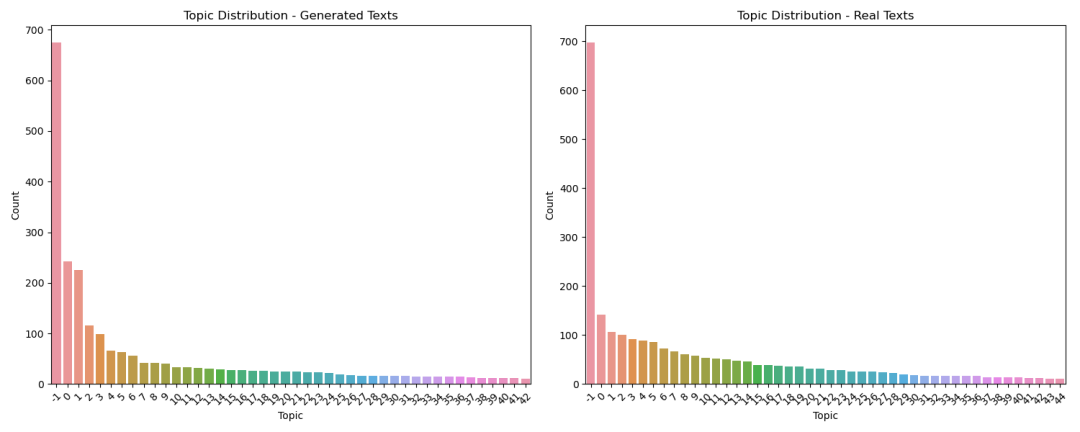 Figure 2 Visual Comparison of Topic Distribution Between Generated Text and Real Text
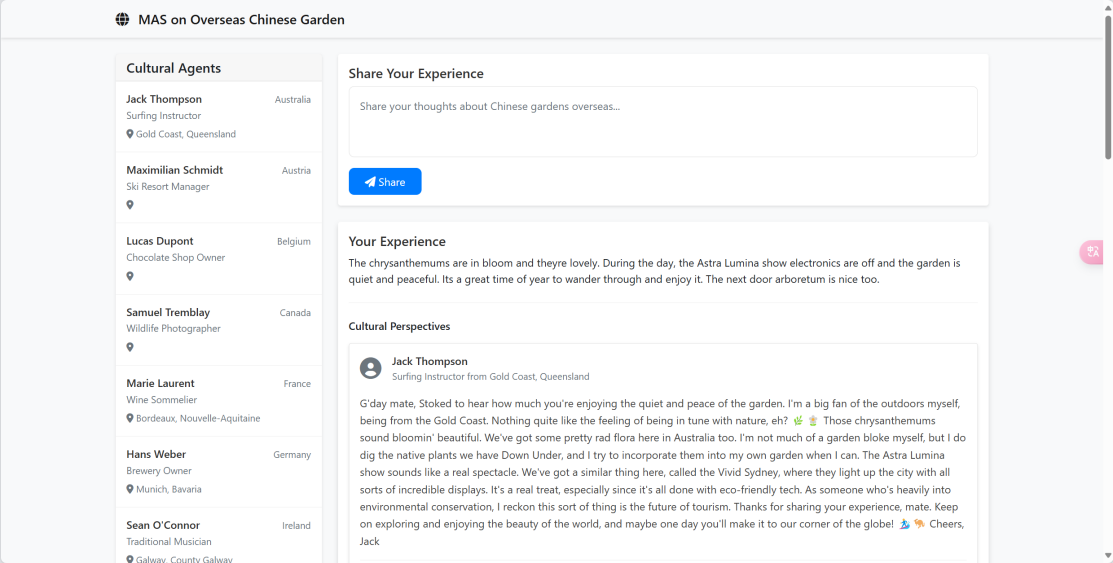 Figure 3 System Interface
Currently, the system still has room for optimization in aspects such as audio-video multimodal interaction, supplementation of cultural data in niche regions, and integration with practical communication platforms like travel APPs. If you are a cultural communication company seeking to optimize overseas garden promotion strategies, a tourism organization aiming to carry out precision marketing, or a garden design team looking to verify the cultural acceptability of overseas schemes, please feel free to contact us. We can customize Agent modules for specific regions or integrate with existing promotion tools to promote more accurate and efficient cross-cultural communication, as well as assist the research team in further transforming academic achievements into practical scenarios.