Landscape Image Generation and Evaluation Assistance System
I. Problems Addressed and Product Positioning
Landscape architects often encounter two key challenges when using AI to generate landscape renderings:
Uncertainty in quality assessment: Judgments based solely on experience are often inaccurate, and there is a lack of professional evaluation tools tailored to the landscape architecture field to verify whether the images meet professional requirements such as clarity and style consistency.
Complexity in style model deployment: Loading different style models (e.g., ancient-style or ecological-style LoRA models) involves intricate operations, making it difficult for practitioners without technical backgrounds to master.
To address these pain points, we have developed a prototype of an AI-assisted system for landscape image generation and evaluation based on multimodal pre-trained models. Rather than replacing designers' creativity, the system is positioned as a "lightweight technical assistant"—it requires no complex deployment. Designers can generate images by uploading style models and inputting design requirements, while the system automatically evaluates image quality. It is adapted to the design scenarios of small and medium-scale landscape projects (e.g., community parks, private gardens), helping practitioners reduce repetitive work and resolve assessment dilemmas.
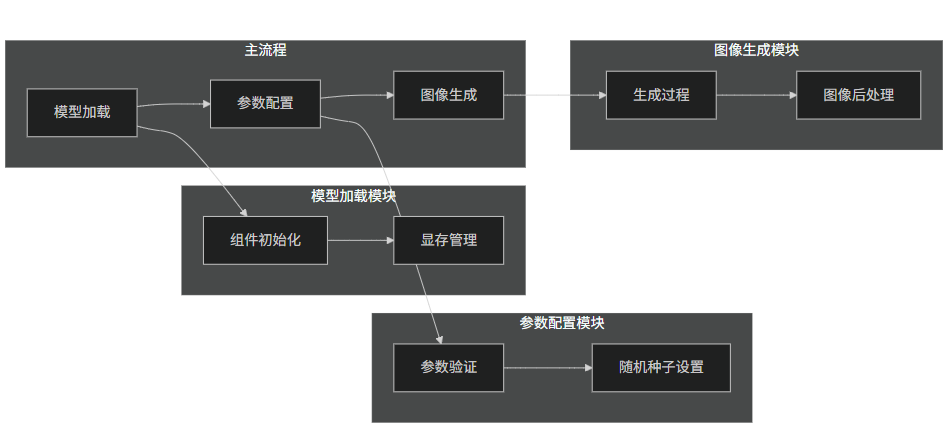 Figure 1 Flow Chart of Image Generation
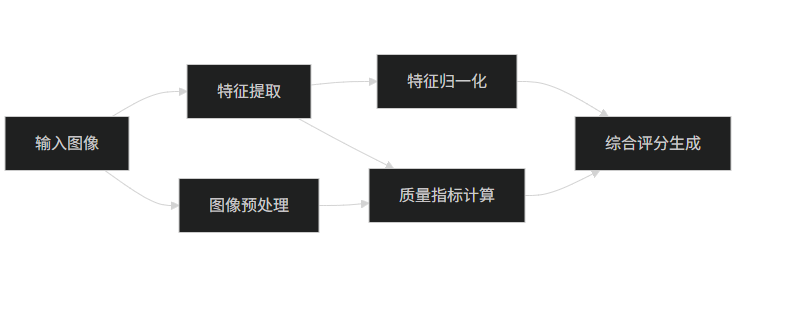 Fig. 2 "Flow Chart of Evaluation
II. Practical Value and Effectiveness
Based on practical tests, the system effectively addresses core needs in landscape architecture design:
Objective Evaluation of Renderings: After designers generate renderings, the system automatically scores them across three dimensions—clarity (e.g., definition of plant contours), visual realism (e.g., proximity to real-world landscape scenarios), and style consistency (e.g., alignment with selected ancient/ecological styles)—eliminating reliance on subjective judgment.
User-Friendly Style Switching: When loading LoRA models for different styles, designers only need to upload files to use them, without requiring coding proficiency or complex configurations. This enables even non-technical designers to switch styles efficiently.
Streamlined Workflow & Time Savings: The integrated rendering and evaluation process reduces the time from rendering generation to scoring by over 60% compared to traditional manual evaluation for small and medium-scale projects. Additionally, the scoring results assist in selecting the most suitable generation models for specific design needs.
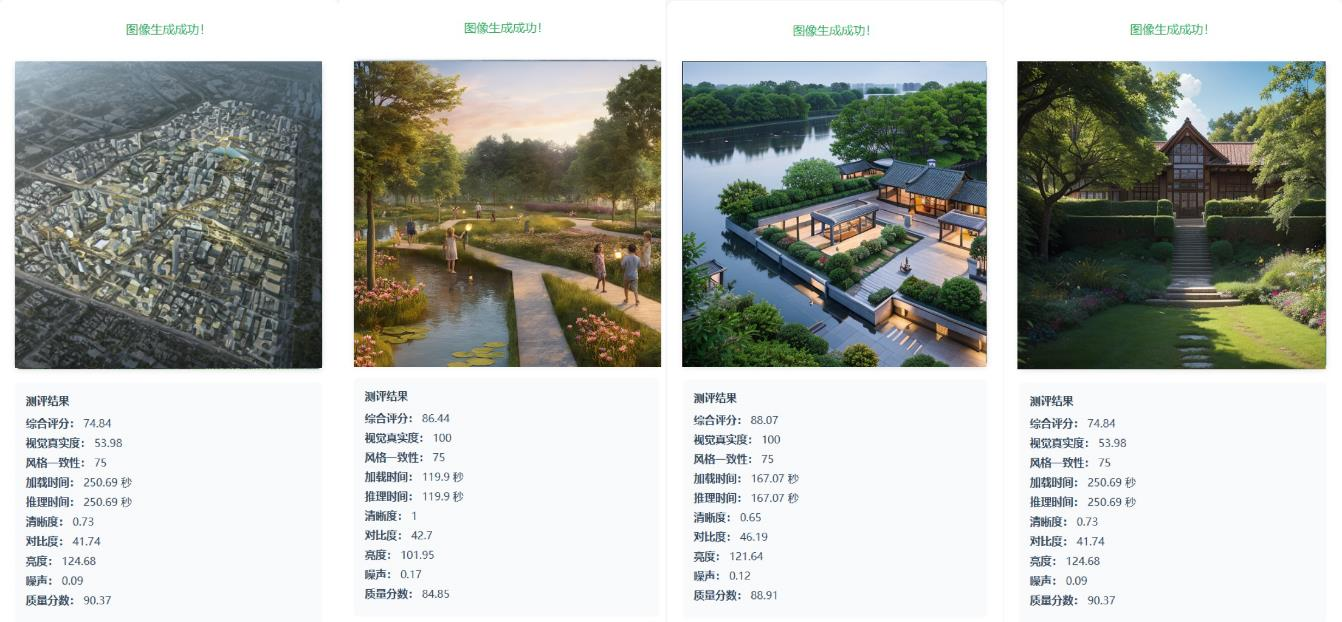 Figure 3: Frontend Interface of Test Results
Currently, the system can adapt to common landscape rendering types (aerial views, human-scale renderings) and mainstream LoRA style models. However, there is room for improvement in supporting more next-generation generative models (e.g., SDXL) and optimizing the evaluation efficiency of large-scale projects (e.g., urban parks).
If you are a landscape design enterprise seeking to enhance the evaluation efficiency of schemes after generation, or a design software team looking to integrate landscape-specific image evaluation functions into your products, please feel free to contact us. We can provide complete technical details and collaborate to refine the functions—such as customizing evaluation criteria for specific styles or integrating system modules into design software—so that the technology can better align with practical industry scenarios and promote the translation of academic achievements into practical applications.